Double Tile!
- 4.9
- Rating
- 10.00M
- Installs
- Free
- Price

 Analysis by App-foxy
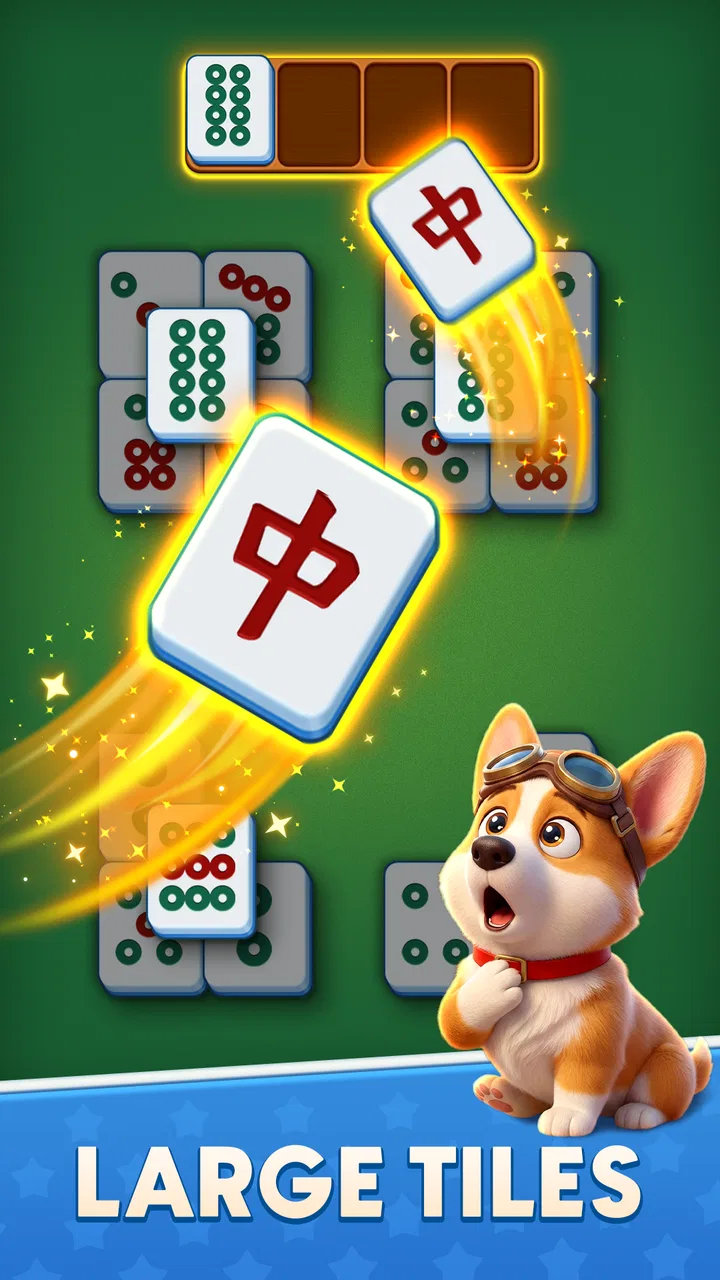
I went into Double Tile expecting a familiar mahjong solitaire game, but its oversized tile presentation gives the basic matching idea a noticeably calmer feel. The premise is easy to understand: clear matching tiles from a board, make room for the pieces underneath, and keep looking for pairs before the layout closes in. It is a puzzle game by HungryStudio, free to play, and its Everyone rating makes it an approachable choice for casual sessions.
What stayed with me after playing was not a dramatic story or a complicated rule set. It was the way the game turns a traditional tile-clearing activity into something visually broad and immediately readable. The larger pieces make the board feel less cramped, while the simple objective lets me start playing without studying instructions first. That combination suits the kind of moment when I want a short mental break rather than a demanding challenge.
The game has already attracted over five million installs and holds a 4.9 average from around 226 thousand ratings, which suggests that its straightforward format has found a wide audience. I can understand the appeal, although that popularity should not be mistaken for universal depth. Players looking for elaborate progression, a narrative setting, or a highly competitive puzzle system may find the experience intentionally restrained.
You May Also Like

 Blood Strike: 2.5 Anniversary
Blood Strike’s Loadouts Turn Every Drop Into a Tactical Gamble
A close look at Blood Strike’s custom loadouts: how fast access to signature weapons reshapes its battle royale rhythm, rewards preparation, and narrows the gap between fights.

 Pandora - Music & Podcasts
Pandora’s Music Is Easy to Start, but Harder to Recover
Pandora’s strength is its low-effort path from a seed to a station. Its weak spot is how much confidence it asks you to place in connection, setup, and quiet recovery.

 8 Ball Pool
 Is Built on Rivalries, Rematches, and Routine
A close look at the rivalries, rematches, shared routines, and unanswered safety questions that turn a quick pool match into a persistent mobile community.

 Samsung Music
’s Quiet Strength Is Playing What You Already Own
Its reach comes less from spectacle than from dependable access to a personal library. That simplicity is both the app’s strongest retention engine and its ceiling.

 AccuWeather: Weather Radar
AccuWeather Review: A Quick, Clear Forecast for Everyday Decisions
For everyday plans, the best forecast is the one you can understand quickly. AccuWeather makes rain timing, radar, and local conditions easy to act on, with a few trade-offs.

 Hill Climb Racing
Why Hill Climb Racing Still Turns Crashes Into One More Run
A tiny car, a bumpy hill and one more upgrade: Hill Climb Racing keeps resurfacing because its simple chaos makes every near-miss feel personal.
More From Our News Desk



A calm visual language built around the tiles
The art direction works because it keeps the board at the center of attention. In many puzzle games, decoration competes with the move you are trying to make. Here, the large tile treatment gives each piece a clear physical presence, so I can scan the available choices without feeling that the screen is asking me to admire a busy scene before I play.
That visual decision also changes how the classic mahjong solitaire structure feels. A conventional small-tile layout can become tiring when I am searching through several layers. Bigger pieces make the act of comparing symbols more comfortable, especially during a quiet evening or when I am playing on a smaller phone. The trade-off is that the board can feel less dense and less visually intricate than versions that emphasize traditional ornament.
I would describe the setting as an atmosphere rather than a world with lore. There is no need to remember characters, locations, or plot details. The presentation creates a soft frame around a repetitive task, allowing the player to focus on recognition and planning. That is useful when I want the game to accompany a pause in the day instead of taking over my attention.
The strongest design choice is the connection between readability and mood. The oversized tiles are not merely a cosmetic twist; they support the game’s promise of a more relaxed matching session. The visual scale directly serves the puzzle, making the board easier to read while preserving the familiar satisfaction of uncovering what lies below a cleared piece.
Why the presentation helps during short sessions
My most natural use for this game is a small gap between other activities. I can imagine opening it while waiting for an appointment, sitting with a coffee, or winding down before sleep. The lack of a story to follow means I do not lose track of anything if I stop after a brief session. When I return, the basic goal is still obvious: find useful matches and gradually expose the board.
That simplicity is also helpful for players who do not usually play puzzle games. Someone can understand the visual language by experimenting with a few matches rather than reading a long tutorial. The game’s Everyone rating reinforces that broad accessibility, though younger players may still benefit from an adult explaining that a legal-looking pair is not always the best pair to choose first.
There is a subtle planning lesson here. A pair that is available now may be less valuable than another pair that opens a blocked area. I found that the large tiles make this relationship easier to notice because the board’s structure remains visible. Instead of tapping quickly whenever I see a match, I can pause and ask which removal changes the layout most.
That pause is where the game becomes more than a simple visual matching exercise. It does not bury the player under complicated systems, but it rewards restraint. If I treat every available pair as equally good, I can create a difficult position for myself. If I look at the layers and prioritize access, the same board becomes a small exercise in sequencing.
Sound that supports rather than dominates
The audio experience is best understood as part of the game’s pacing. A matching puzzle like this does not need a loud soundtrack or dramatic effects to communicate success. Its rhythm comes from the repeated cycle of spotting, selecting, clearing, and reassessing. That makes the game suitable for players who prefer a quiet background activity over an energetic arcade session.
I appreciate that the mood is carried primarily by the interaction itself. Each successful match gives the session a gentle forward motion, while the board’s changing shape provides enough variation to prevent every moment from feeling identical. The absence of a narrative soundtrack to track means I can play while taking a mental breather without having to follow a dramatic emotional arc.
This kind of sound-and-action relationship has a practical benefit: it encourages measured play. I am less tempted to rush through the board simply because the presentation is demanding constant reactions. Instead, the experience leaves room for the small satisfaction of finding a pair and then checking what that move has revealed.
Players who need strong audio feedback or a lively musical identity may find the presentation too subdued. That is not necessarily a flaw, but it defines the audience. This is closer to a quiet tabletop activity translated to a phone than to a fast puzzle game built around spectacle. For me, that restraint fits the oversized tile concept.
Where the mechanics fit the mood
The core mechanics and the visual direction are pulling in the same direction. The game asks me to recognize matching tiles, manage what is accessible, and clear the arrangement step by step. The large pieces make those decisions feel less like a frantic search and more like a deliberate sorting task, which supports the relaxing tone without removing the need to think.
One useful habit is to inspect the board before making the first obvious match. I look for pairs that are limiting access to several other pieces, then compare them with pairs that merely remove two tiles from the edge. This small routine improves my decisions without adding complexity. It also gives the game more replay value than its short description might suggest, because the same basic rule can produce different priorities depending on the arrangement.
Another practical tip is to avoid treating the first visible pair as an automatic move. In a layered solitaire board, clearing one side can expose a helpful tile while clearing another may leave the important pieces buried. I find it useful to think in terms of future visibility rather than immediate progress. That is the kind of insight that makes the game feel purposeful instead of purely reactive.
The oversized format has a trade-off. It improves recognition, but it can also make the board feel more open than a traditional mahjong layout. Players who enjoy dense, ornate arrangements may miss the visual complexity and pressure of smaller tiles packed closely together. The game’s appeal depends on whether clarity feels like a welcome improvement or a reduction in challenge.
I also would not choose this as my main puzzle game if I wanted a competitive ladder, a story campaign, or a system built around constant unlocking. Its strength is the immediate board-level decision, not a large surrounding framework. That focus is valuable for casual players, but it means the long-term motivation will come mainly from enjoying the act of solving layouts.
Who will get the most from it
This is a good fit for someone who likes mahjong solitaire but wants a more spacious and readable presentation. It also suits players who enjoy low-pressure pattern recognition, older phones that support Android 6.0 or later, and anyone who wants a game that can be picked up without remembering a complicated control scheme. Since it is free, trying it requires little commitment beyond the download and the time spent learning whether its pace suits you.
I would particularly recommend it to a person who uses games as a way to reset between tasks. Imagine finishing a long stretch of work, opening the game for a few boards, and focusing on which tile removal exposes the best next option. The activity is structured enough to occupy the mind, but not so demanding that it requires complete emotional investment. That balance is the main reason I can see myself returning to it.
It is less suitable for players who become frustrated by repeating a familiar puzzle loop. If matching tiles feels satisfying only when combined with exploration, character development, or a constantly changing rule set, this focused design may seem thin. Likewise, people who prefer fast reflex challenges will probably find the deliberate pace too quiet.
There is also a difference between relaxing and effortless. The presentation lowers visual strain, but the puzzle still benefits from planning. A player who taps without considering the remaining layers can run into trouble. I like that tension because it prevents the calm atmosphere from becoming completely passive, although someone seeking a purely automatic time-filler may prefer a simpler matching game.
How it compares with familiar alternatives
Compared with standard mahjong solitaire apps, the clearest distinction is the emphasis on larger tiles and a less crowded visual experience. Traditional alternatives may appeal more to players who want ornate symbols, tightly packed boards, or a stronger sense of classic tabletop styling. This game is the better choice when I value quick recognition and a softer presentation over visual density.
Compared with match-three games, it asks for a different kind of attention. Match-three play often rewards rapid reactions and chain-building, while this format makes me consider access, order, and the consequences of removing a pair. I can play it more slowly, and the satisfaction comes from opening the board rather than creating a cascade.
Compared with minimalist logic puzzles, it offers a more tactile visual metaphor. I am not only manipulating abstract shapes or numbers; I am clearing a layered arrangement of recognizable tiles. That makes the activity easier to enter, though it may provide less variety for players who want multiple puzzle rules in one app.
The right choice therefore depends on the kind of break I want. For a focused, quiet matching session, this game is convincing. For competition, narrative progression, or rapidly changing challenges, another puzzle category will likely be more rewarding. Its identity is strongest when it stays close to the simple pleasure of seeing a crowded board gradually become clear.
My verdict on the overall atmosphere
After spending time with it, I see Double Tile as a deliberately calm puzzle game rather than a broad entertainment package. HungryStudio has aligned the oversized visual treatment, the measured interaction, and the straightforward objective around one clear mood. The game does not need a dramatic setting to hold attention; its atmosphere comes from making the act of sorting feel comfortable and readable.
The current version is 1.8.1, and the game’s broad reception—over five million installs, with around 2.2 thousand written reviews—shows that this uncomplicated approach has connected with many players. I would not use those figures as a substitute for personal taste, but they do make the game easier to recommend as an established casual option rather than an obscure experiment.
My main reservation is the same quality that makes it accessible: the focused design may not offer enough variety for someone who needs a strong progression system or a constant stream of new mechanics. The game’s mood is coherent because it avoids clutter, but that restraint can feel limiting if I am playing for long stretches and want more than board-by-board concentration.
For everyday use, though, I think the trade-off works. I can open it without preparing, understand the board quickly, and settle into a rhythm of observation and careful removal. The most effective way to play is not to rush: scan the layers, prioritize moves that reveal useful space, and treat each pair as part of a sequence rather than an isolated tap.
My recommendation is simple: choose this free puzzle game if you want mahjong solitaire with a spacious, gentle presentation and enough planning to keep the activity engaging. Skip it if you need competition, story, or high-energy action. For everyone else, especially players looking for a quiet phone game that fits naturally into short pauses, it creates a coherent playable mood and delivers exactly where its design is most confident.
FAQs for Double Tile!
01What is Double Tile! and how does it work?
Double Tile! is a puzzle game that challenges players to match and merge tiles to achieve higher scores. The game mechanics involve sliding tiles on a grid to combine them, creating new tiles with higher values. This simple yet engaging gameplay requires strategic thinking to optimize space and achieve the highest possible score.
02Is Double Tile! available for both Android and iOS devices?
Yes, Double Tile! is available for download on both Android and iOS platforms. Users can easily find the game on the Google Play Store for Android devices and the Apple App Store for iOS devices. The game is free to download with optional in-app purchases available.
03Are there any in-app purchases or ads in Double Tile!?
Double Tile! includes optional in-app purchases that allow players to enhance their gaming experience, such as purchasing extra moves or hints. The game also features ads, but they can be removed by making a one-time purchase. This allows players to enjoy an uninterrupted gaming experience.
04What are some tips for getting high scores in Double Tile!?
To achieve high scores in Double Tile!, focus on planning your moves ahead and strategically merging tiles. Try to keep the highest value tiles in the corners and avoid filling the grid too quickly. Take advantage of special power-ups available in the game to clear difficult levels more efficiently.
05Is an internet connection required to play Double Tile!?
No, Double Tile! does not require a constant internet connection to play. However, an internet connection is needed for certain features such as in-app purchases and viewing ads. Players can enjoy the core gameplay offline, making it convenient for gaming on the go.
Pros
- Engaging tile-matching gameplay.
- Variety of levels keeps it interesting.
- Smooth and intuitive controls.
- Offline mode available for play anywhere.
- Frequent updates with new challenges.
Cons
- In-app purchases can be pricey.
- Ads may interrupt gameplay frequently.
- Limited customization options.
- Some levels can feel repetitive.
- Battery consumption is slightly high.

Double Tile!
Gallery